
Archives February 2009

Pinching geraniums and greenhouse chores

Now that the end of February is here we can begin to look to the spring with earnest.
Most seeds for annuals and vegetables call for starting 6 to 8 weeks before the date of the last frost. Anyone who has lived in Northern New York for more than a few years probably knows that we can get a frost until Memorial Day, which falls on the 25th of May this year, 2009. The actual date can vary due to changing weather but we use the end of may for our planting rule of thumb.

But this is just a guideline. If we want the plants to be large and vigorous we need to start them earlier. For example we started the begonias in the beginning of January, which if the truth be known is a bit late.

This week we started the wave petunias. They are a bit slow to start but we want to be sure they will fill a basket by Mothers Day. And since we use organic methods we do not spray growth inhibitors on the petunias. Growth inhibiting chemicals stunt the upward growth which makes the plants bushy. We prefer to pinch the plants to make them bush out.

For example we have a number of Martha Washington Geraniums that we will use to decorate in window boxes and more we will sell. Once the starts are on the way the plants will try to send out blossoms. We want the plant energy to go into root and leaf development so we pick the blooms off. In cases where we the plants are missing tags we allow a few blossoms but once they are tagged we pick the blossom buds as soon as they appear, and it really seems to help.

Our other tasks this week included transplanting the tomatoes and lettuce plants that were started a few weeks ago. We use 6 by 8 plastic flats for starting small numbers of plants, like 4 to 6 tomatoes of a few lettuces plants.

6 by 8’s are 6 packs, 8 in a flat for a total of 48 cells. If we are growing to sell we usually use open flats to start as many seeds at once, 150 or more, but it makes more since to use the individual 6 packs to start smaller numbers.

We also took orders from the Jefferson and Lewis County Cooperative Extensions for tomato plants. We grow and donate plants and this year it looks like we will be growing up to 200 tomatoes for the bucket gardens. They use a determinate bush type tomato like an early girl. We want to start them early so they are good and bush for transplanting when the time comes. I think we will try and find some deeper growing packs to give the roots more room since we will be starting them early. This way when the plants are distributed they will be well on the way to producing tomatoes.

We really like this sunny weather, even if its cold outside, the sun keeps the plants warm and dry, free from mold and disease. The only draw back is we can not spray for bugs in sunny weather. We use an organic spray called Pyola which is a emulsified canola oil and natural pyrithium. The emulsified oil can burn plants when used in strong sunlight so we may wait a few days to spray when the weather is more overcast.
Late winter thaw and sorting seeds

There is doubt that the month of January has been one of the coldest in recent memory. I know. We can gauge it by the size of the crack in the kitchen wall that appears when the foundation heaves. The wider the crack the colder the temperature. Of course I have to shake my head when I look at it.

We tried hard to make walls perfectly plumb and straight. Little did we know the foundation does not extend to the proper depth that would be below the frost line. The only way to fix the problem is to dig the foundation down and pour new walls under the existing ones. It’s a job but I have been involved in just such a project before. Once while working as a mason tender we had to dig up a house, by hand, and replace the foundation walls.

So when we get these warm spells where the temps go above freezing, thoughts turn to getting the seeds together for this spring. Never mind that the weather has turned cold again and snow is falling again. Spring will be here, and soon.

Our seeds are kept in 2 places, the small refrigerator in the studio and a 5 gallon pail that we carry back and fourth to the greenhouse. Some of the seeds we buy are fairly expensive so we store them cool in the small refrigerator, along with various candy and treats we keep handy for the help. The less expensive seeds are packed into a white pail with a tight fitting top.

The seeds are more or less segregated as to herbs, annual flowers, perennial flowers, vegetables and so on. Zip lock bags keep the bundles of seed packets from getting wet from spilled water or condensation.
The trouble is we don’t seem to be able to throw the seeds out when they expire. And they do expire. We found this out the other day when the spinach we planted 2 weeks ago failed to germinate. The seeds looked fine. I swear. The package was sealed and looked like new, but the seeds did not germinate.

After some quick investigation it was determined that the seeds were packaged for 1997. So we now have a new rule. Seeds more than a few years old should be tested to determine if they are any good. A cheep and easy way to do this is take a few seeds, six or so, and fold them into a dampish paper towel. Put the whole thing into a plastic bag so that it does not dry out.

Using the seed packet as a guide, wait for the germination period to expire. It’s ok to peek in the mean time but leave them in there for a few more days than suggested. And keep them somewhat warm, not cooked, but maybe near a source of warm air. If they germinate transplant them into some pots and let them grow.
If the test fails to produce a majority of plants, ditch the pack.

This is really important for seeds that sell off the shelves quickly. It is a real drag to run out of seeds only to find there are no more available. And this year we are paying close attention to the variety of plants we start.

In the past we have spent considerable time and money pursuing seeds and plants that were somewhat fancy and interesting but had no real value unless they were sold. For example if we grow more pepper plants than we can sell we just plant the extras and freeze the surplus but there’s no eating annual flowers and try to pay the bills with marigolds. Perennials can usually be kept over for the next year but the annuals take up a lot of space in the greenhouse so the trial plantings and extraneous plants take up room that could be used for growing food crops.

At any rate I have a feeling that the market for nonessential plants will be nonexistent. This year we are going for plants and crops we enjoy but are some what costly to buy. This includes tomatoes and peppers for eating fresh and to sell or freeze. We will also be including some winter squash like butternut, long island cheese, and maybe pumpkins.

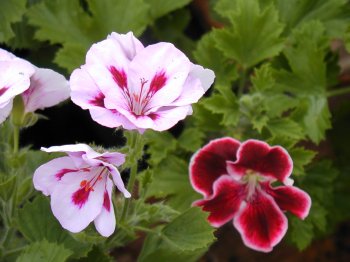
In the mean time here are some Martha Washington geraniums blooms. They all look the same and there is no telling which kind they are until they bloom, and then we can mark them. So far we have 5 different colors but I think there are more.

Why not mark them in the fall? That …. would spoil the surprise!


martha washington geranium

Watering plants in winter

Watering plants in winter is an important task in our zone 4 climate.
We heat our houses in the winter and when you add in the cold dry air that equals a tough environment for plants and people for that matter.

For us people it is easy to tell when the air is too dry … chapped lips, scratchy skin and dry nasal passages all tell us when the air is dry. And it’s relativity easy for us to have another glass of water or grab the lip balm or skin lotion. But for plants it may not always be obvious. After all the effect of chapped lips is felt every time we open our mouth or lick our lips but how often do we check the plants.

One thinking that can make things easier for people and plants is a humidifier. Humidifiers add moisture to the air in the form of mist, steam, and by evaporation aided by a fan. Using a humidifier would probably be a good idea, but like everything else in life, there are many opinions on which one is best. All we can say is read up on them and ask those who use one how they feel About the type they use.
Just keeping pans of water on the heat registers will add moisture to the air and in the old days there was a pot of water on the back of the stove to do the same duty.

Water vapor in the air can make a big difference in how well plants do. Try putting a few plants on the window sill over a kitchen sink and you will see how much better they do compared to plants left in dryer areas. Of course the plants right in plain sight and within easy access to water are bound to do well.
Plants respirate or breath through tiny holes in the bottom of the leaves. During the day the plants absorb carbon dioxide and give off oxygen and at night they use a little oxygen and give off carbon dioxide and water vapor. So even when they are taking in water vapor they are giving off the water that is drawn up from the roots to the leaves.

Naturally some plants will like it dryer than others. Today we re-potted some geraniums that were unceremoniously pulled up by the roots and crammed into plastic bags, last fall. Geraniums are succulent plants and related to cactus and like cactus the geraniums can go a long time with just a little water. On the other hand you may have plants that need watering twice a week. Ad to that some days will be dryer than others depending on the weather.

A good way to make sure all the plants are happy is to go around at least twice a week and look at each plant. Dig a finger into the soil to see how dry the plant is . Most house and garden plants want to be a little moist but check your varieties to be sure. Remember that water requirements will vary with the plants life cycle. New planting and seedlings do not want to dry out, but as soon as the true leaves develop the watering can be cut back a little.

When watering try to use room temperature water that does not have chemicals or pollutants. Leaving the water out lets chemicals line chlorine to dissipate. If you are on your own well with no chlorine you should have your water checked frequently but leave it out for the plants anyway. Water containing chemicals like benzine will damage or kill your plants so make sure your source is pure.

One trick to keep both you and your plants hydrated is to set the pots in shallow trays filled with small aquarium stones and keep water in the trays. The water will evaporate and help keep the plants and the house hydrated.