Category Zone 4 Gardening

Hot dry weather stunts Zucchini.

This year we tried a new kind of summer squash and an old reliable zucchini. I for one am not impressed with the new squash. Since I did not order the seeds, (turns head to both sides looking around) but I can guarantee the crook neck will be on the seed list for next year. One thing for sure, hot dry weather stunts zucchini.

As for the zucchini, what we have picked has been nice but what there has been of it is scant compared to past years. After asking around we found that other gardeners are experiencing the same results. Naturally we we right away try to assign blame to the weather. After all it can have been our superior gardening skills.

The weather has been hot, true, but we have had water in the garden well all season long. As a matter of fact a rather large bull frog has taken up residence. I can’t imagine how he got there because the stone sides of the well are nearly 3 foot high. I suppose he could have jumped it but why would he? Can frogs smell water? Maybe a trick from a tricksty neighbor?

Only the frog knows for sure and he is not saying. As long as there is water in the well he should be fine but he might be better off out of the well. Trouble is getting him out of the well. He has a little ledge to rest on but the minute anyone peers over the top he dives into the water. We will try a net attached to a long pole.

As far as the water goes we seem to be OK. It is raining right now, a slow soaking rain, and that should keep the tomato plants hydrated. Our garden is the low spot for at least 50 acres and so it usually does not need much watering which is good because we pay for the water.

When we looked at the property to buy, everything out back was unmowed and very wet. The ground quivered under foot and there were legions of leopard frogs. At that time it was too wet for gardening but mowing helped to equalize the moisture content and it is fine for gardening now.

To grow good basil you need to rant and rave

While reading about basil in “The Healing Herbs” we were amused to find that to the ancient Greeks and Romans, basil was the symbol of hostility and insanity. And to grow truly fragrant basil one had to shout and swear angrily while sowing the seeds. If nothing else it might serve to blow off steam.
The tomatoes plants are growing fast in this warm weather. Last week was very hot and dry and it was looking like we would need to water the plants but a good soaking rain, about 2″, came and solved that problem.

basil starts

Now the problem is to get them staked. We use 4′ bamboo poles and strips of T-shirt material. The knobs on the bamboo keep the knots from slipping down the pole.

As a matter of fact our dug well has water to the top. We must remember to get some mosquito cakes to keep the larva from developing. There are plans in the works for a screen to keep the mosquitoes out but it is pretty far down on the priority list.

If the weather turns damp we may be in for a dose of the “blight” that we saw last year. The early blight was brought in from store bought plants and is carried on the wind. Even our northern grown plants were subject to damage. We talked to out greenhouse inspector this weekend and he said at this point the blight is not in our area but it might do well to spray some copper based fungicide. There are copper based products that are considered organic. We have some other organic products we will be using as well.
The squash and cukes seem fine and there are small 3″ fruit on the yellow squash vines. In a few days we should have some nice little squash.

The peppers love the hot weather and are gowning nicely with small fruit started as well.
Lastly tonight is the second farmers market held at the Cooperative Extension in Watertown. We went last week and a group of brave gardeners braved the heat to offer greens, tomatoes, cheese, bread and other local products. This market does not allow crafts or rummage or imported vegetables when there are vendors with stock.

So better get down and tie the tomatoes up off the ground.

Planting the garden at last

Growing and selling plants takes a lot of time and so we have only finished Planting the garden at last. This is a bit late but we have high hopes that everything will come in fine. This year has seen some early warm weather. Add to that big box stores who continually offer plants too early and off season and people are sure to jump the gun when it comes to planting vegetables.

As a matter of fact we had a number of customers buying replacement tomatoes because they started too early and were nipped by the frost. I don’t care how warm the spring is we can have a frost up to and after Memorial Day.

A week or two will not really make a big difference as our plants had a good head start to begin with. As a matter of fact some of the squash already had small fruit showing when we planted them but we have seen this in the past and once they are in the ground they will take off.

This year we are using burlap bags for weed control in the yellow squash and zucchini beds. The burlap is in the form of coffee bags from where else but a coffee roasting company in Syracuse. They gave us as many as we wanted for free and that amounted to about 1/2 a pickup truck load. And we have a full sized pickup bed. We laid them down with an over lap of about 6 inches in one direction and side to side in the other. They are heavy and should hold fast in normal light wind, especially once the plants cover the area, but we stapled the edged down with bent coat hangers to keep the bags in place until the plants are well established.

We gave them a good soaking with a sprinkler and the water trickles down into the soil with no problem. Our hopes are that the bags will hold moisture in and keep the weeds down. The bags probably will not rot away in 1 season so we will probably pull them up and determine if they can be used again or left to the slow compost heap.

We got them in the first place for the asparagus bed but there are enough for that and more.
The tomatoes are planted in rows covered with woven landscape fabric. We till a 3 foot wide row about 30 feet long and cover the whole thing with a strip of landscape fabric. We then leave 2 feet of grass followed by another row and so on. The plants are set in by cutting a slit in the fabric and using a trowel to make a hole deep enough for the plants. We use a premium quality fabric, available only at greenhouse suppliers, and it lasts year after year. We just pull it up in the fall and fold it up until the spring. Like the burlap we use bent coat hangers to hold it down. We are fortunate to have a seemingly endless supply of wire coat hangers. Many people who use a uniform service know that the fresh uniforms come each week with new hangers. We cut them up and bend them with a pair of lines mans pliers.
So we may be a bit late but oh well.

The great 2010 rototiller saga and massacree.

This year I had the bright idea of making some extra money by tilling gardens. It seemed to make sense, we have tillers and people need gardens tilled.

The first obstacle was how to get the tiller from point A, being our place to point B, or the tilling location.

Choice one is to use ramps to drive the tiller into the back of the pickup truck but we have a full sized bed with a big cap and taking the cap on and off is a bit of a pain. The tiller would not fit with the cap on.

The other idea was to use a trailer. We have 2 boat trailers but they have boats and since they are boat trailers the whole idea of trying to figure that out was out of the question. We would have to find a trailer.

My brother has a rather large extended group of friends who always seem to have this and that for sale and he is on the road quite a bit so I called him to see if he had any leads. As it turned out he has a small trailer that he does not need and was willing to sell it for $25.00. What a deal. Right?
When we picked the trailer up we noticed the hubs did not have grease caps and the bearings were very tight and full of stones and grit. Oh well for $25.00 how could I complain. A quick stop at the tractor store and we could have new bearings and caps right?

Turns out the hubs are metric. 52mm to be exact and there are no 52mm parts anywhere in town.
Oh yeah, I had an ad and people were calling to have their gardens tilled. All the warm weather has folks champing at the bit. This just added to the urgency.

Anyway after a 1 1/2 hour web search I was able to locate the bearings which came as a kit with and inside and outside bearing and matching races with dust seals and grease caps. All for about $60.00 including shipping. Still not bad.

Oh and I forgot another thing. The trailer hitch for this trailer is 1 7/8″ and all my boat trailers are 2″. Reese makes a quick change trailer hitch with both sizes for about $40.00. So we now have a quick change ball for the trailers.

After we got the trailer home, after the registration and license, $25.00, we noticed the deck was rotted and the hardware was mismatched and rusted. A piece of plywood would be about $20.00. I cut the bolts off with the torch and decided to clean up the rust with the angle grinder and repaint the frame as long as it was exposed.

Funny thing about angle grinders with wire cups, when they grab hold of trailer light wiring they rip the leads out of the lights. Maybe that can be fixed? I am sure I can find them for sale if they can’t be fixed.

All the time customers are patiently waiting for me to show up with the tiller. Oh yeah the tiller.
We do not have an equipment shed yet so equipment is covered with tarps and can get wet. The throttle cable was rusted solid and a new one was bought for the sum of $25.00.

It’s and easy fix to replace the throttle cable, especially since it it OEM and should fit perfectly. This is where I should mention that our tiller is a deluxe model troy bilt horse with a big steel frame that protects the motor from damage. I thought it would be easier to do maintenance with out the frame it so I took it off. When I was replacing the throttle cable I noticed the carburetor adjustment screw seemed to be in an odd position. I could not understand this because I have adjusted the carb lots of time. It was at such a weird angle that I couldn’t imagine how I would be able to adjust it. I could not understand at all.

Turns out the mower deck to the lawn tractor, yes it’s really a tractor, small but tractor non the less, fell against the carb and broke the tube that connects the carb to the engine. Tom at the Saw Barn had one and it was only $20.00.

I tore the carb down, cleaned it out and replaced the float valve seat and adjusted the float. One pull and it runs like a champ. I was encouraged and I went out and tilled a row just to make sure everything was working.

Meanwhile it’s time to replace the trailer deck but before that I had Metal Man cut me some 2 by 4 pieces of box steel so that I could build racks for the trailer sides. I can weld tolerably well but it seems like every time I do I have to get back into the swing. I guess it took me 3 sockets before my welds looked half way like a real one. They are strong and should hold. I guess the steel was about $24.00 including tax.

I needed wood for the rack and in my book nothing works as well as larch, or tamarack as it is also known. It is full of resin and does not poison the environment or me. The only drawback is the saw mill is 25 miles away and they are the closes source for larch. I can’t lay my hands on the bill for the wood but 6 1by8s and 2 10′ 2by4s cost about $30.00.

Now that I have everything except the plywood and hardware it looks like rain for the next few days so we elected to take the trailer and wood down to Black River where I can finish the job in the nice dry garage. We backed the trailer into the garage and unloaded the larch and finished with the tools when Phyllis mentioned the truck seemed to be sitting at a strange angle.

Oh, I scoffed, I bet one of the air shocks is low and we can level it up when we get back home. I installed air bags because the stupid springs on this Dodge pickup have backward eyes on the ends. It is a really bad design and as a matter of fact we had one break on us with about 600 pounds of clay in the back.

I let some air out of the high side and the truck did not level. At least the flash light works! Naturally when I looked under the truck I discover the leaf spring is broken at the eye and wedged against the bottom of the bed.
Perfect.
$269.00 for parts and that is not even hardware or the stupid broken spring.

If the hardware comes to $20.00 and the spring is $180.00 like the last time that would bring the total to about $469.00 not including my time.

At this rate I will need to till 15.64 gardens to break even.

I believe it would have been less expensive to simply give a 20 dollar bill to anyone who called me for a tilling job.

On a positive note. The popcorn tonight is exceptional and believe it or not that just about evens it out in my book. Life is good!

Still too early to plant the garden

Last night we had a frost and tonight the temps will go down into the upper 20’s f.
This is not uncommon for this time of year. As a matter of fact the temperatures have been fairly mild compared to some years. Looks like it’s still too early to plant the garden

Usually the end of May is when we should think about planting in this part of the country but sometimes the weather tricks people into thinking it is time to plant now. That and the big box stores.
The large chain stores do not seem to have a clue or even care that they sell plants out of season and even out of zone.

Only cold hearty plants and vegetables can be safely planted this time of year. This includes some herbs, lettuce, spinach and peas. And that is taking a chance that we will not have a hard freeze. We have had snow on Mothers Day and it is not out of the realm of possibility.

Gardners need to pay attention to the temperature of the soil as well as the air. Placing black plastic or landscape fabric on the ground can help to raise the soil temperature but it is just as easy to wait.
It is true that we have a shorter growing season than some parts of the country but it has usually been long enough to grow many crops successfully.

Besides, there are plenty of other early spring tasks to attend to. The end of May will be here before you know it!

Transplanting Lupines

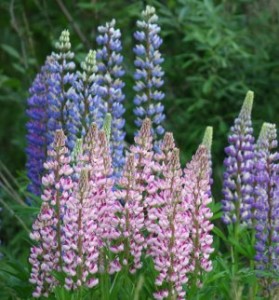
blue pink lpine

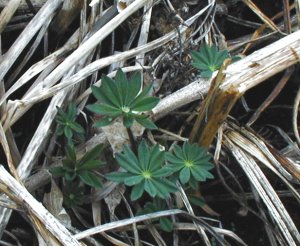
lupine start closeup

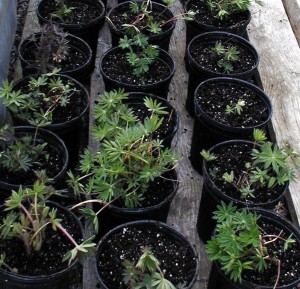
lupines in pots

Lupines are some of the more hearty zone 4 perennial flowers we grow and we grow a lot of them for one good reason.
People really like them and they come back year after year, so lets talk about transplanting Lupines.

Lupines come in a variety of colors including blues, purples and lavenders, pinks and even yellows.
It’s fairly easy to start them from seed. The seed has a hard shell and it helps to scrape the surface of the shell a bit and it also helps to soak the seeds in water overnight.
However we have found what we feel is a better way.

If the seed stalks are left on the plants in the fall the seeds will fall to the ground and spring up every where as little lupine plants.

These little plants are well on the way when the snow is gone and the ground is just thawing. The trick is to get out and dig them up while the earth is still wet and soft from the melting snow. The roots can be very long, a foot or more, and if they become very hard to dig if left to grow deep.
In about an hour the other day I was able to dig up more than 30 small plants, and by small I mean of a size that fills a 1 gallon pot.

A small shovel or hand trowel and dinging with hand seems to work best. Pile them up and load them into a pail or wheel barrow. Keep the roots wet and out of the sun.

If potting them up it is best to get them into the pots right away. If the plants are going to be moved to another garden put them in a plastic bag with some water and transplant them as soon as possible.

New transplants should be kept out of the wind and direct sunlight for a few days. Make sure they do not dry out. We use a time released fertilizer in all of our potted perennials as well as a dose of low nitrogen fertilizer to promote good root growth.

Roto Tilling

We have decided to throw our hat into the rototilling ring seeing we have several tillers that do not seem to get used enough.
The details are on the rototilling page.

We have a 10 hp Troy Bilt Horse, rear tine tiller and a smaller cultivator/edger.
The Horse is an older model and was built to last, not like the ones sold now at the big box stores. When this tiller was made in Troy NY, they used steel and iron for every part except the gas line and tires and a few carburetor parts.

The new ones loaded with plastic and thin sheet metal.
The new light weight aluminum engines are not as rugged as the older cast iron versions.
As a matter of fact the new tillers are made by MTD, a company that makes most of the small engine lawn and garden equipment sold at the box stores. They buy and use the old names like Troy Bilt and Cub Cadet but that is as far as the quality goes.

Our 105 Cub Cadet that was made by International Harvester company is solid and is still going strong even though it was made in 1968.

There seems to be a fair amount of controversy on the topic of rototilling in general.
The first argument seems to be over killing worms and spiders.
No doubt tilling kills worms and spiders but I know from my experience digging fishing worms that just turning over soil can kill worms. As far as the spiders go I like the yellow and black garden spiders but I am not sure they live underground.

This I am sure of. Breaking ground is … well back breaking work.
Those who oppose tilling recommend planting in raised beds or working the ground by spade and that is fine in some cases.

A previously tilled patch is not too hard to turn over with a spade but new work it really really hard in most cases.
Raised beds are great for smaller gardens but it is expensive to construct and fill large raised beds. True it is possible over time building one or two raised beds each season to end up with large planting areas.

The other argument is deep tilling ruins the soil by making it too fine, and there may be truth to this but in many case the soil is crummy to begin with. For example when we started our present gardening beds the soil was very heavy and the area is low and does not drain well. By using a tiller we are able to introduce larger leaf mold and other organic bulk to the soil to lighten it up.

We till about 4 to 6 inches deep so the deeper soil is not disturbed.
There is no need to go over and over the soil until it is fine as sand, and if it is fine as sand the tiller can be used to mix in some bulk.

Our strongest argument for tilling is the time saving aspect. We have many beds and a short growing season. We have to get the ground ready to plant quickly.
All this said we do not believe in tilling up a large patches of ground.

We grow in 3 foot wide strips with turf between so we do not compact the soil when harvesting.
The rows are covered by 3 foot landscape fabric and we never have to pull a weed.

Here is an example of tilled rows with turf between them. Notice how the soil is crumbly and somewhat clumpy in appearance. This is because we go over the patch once, to mix in the compost and that’s the end of it.

Anyway we do not wish to be the arbiter of other gardeners practices, but we do want to make some extra money with our tillers.

Starting Plants at Home

It’s early spring and this is the time of year when people begin to think about starting plants at home for summer flowers and vegetables.
Starting and growing seeds at home is a fun way to save money and learn about the plants in your garden.
It’s really easy to start seeds at home and there are only a few important rules to follow that will make the effort a success.

Its important to note the zone or climate for the plant you wish to grow. This is very important for growing perennial flower plants as some plants can not take cold winters and will die.
Other considerations are for crops that take a long hot season to mature. Read the label to determine this information and ask your neighbors or the seed-man at the local farm center.
Other consideration might be sun light or water requirements as some plants want sun and some don’t and some plants like it dry and some like it wet. It’s all on the label or go to the seed company web site to check.

Other considerations might be soil temperature for vegetable seeds or pot size for container gardens.
It may be necessary to start some plants indoors, especially if the area has cool spring weather. Our zone 4 has cool weather and so we figure the date to plant out doors is about memorial day. Other areas will be different but this determines if and when the plants should be started indoors.

Equipment for starting indoors: Seeds, seed starting mix or some kind of soil ( preferably sterile ), containers for starting the seeds and transplanting the starts, some kind of fertilizer and very important, a source of light. The sun works best but even a very sunny window may not be enough to satisfy all plants. For example begonias need somewhere around 12 hours of light to do well. A sunny window may seem like a perfect place to start plants, and it can be done, but overhead lighting, preferably florescent, is the best. Plain tubes will work but you could use the growlux type bulbs.
To germinate the seeds: First check the seed packet and see if the seeds need to be buried, or if they need light to germinate. Yes some seeds need light so be sure to check.

Start with a shallow container and fill it with a few inches of seed starting mix. Plant the seeds according to the direction on the package and lightly water. Then cover the soil with plastic wrap. Just lay the wrap on the soil and put the container in a place where the temperature will be at least 65 degrees, more may be better.

Check the package for the germination time and peek under the plastic from time to time, making sure the soil is just da[, not dry or soggy.
When the plants begin to sprout remove the plastic and make sure they do not dry out. Don’t drownd the plants, but keep them damp.

Here is where the light is important. The lights must be about 1 inch above the plants. If the plants do not get enough light they will be leggy and less likely to thrive. The lights can be raised and lowered easily if they are hung on light chain with s hooks. As the sprouts grow the lights can be raised, keeping the lamps about 1 inch above the plants.

This is not to say that plants could not be started in a sunny window or cold frame but windows do not transmit enough light for plants to do well and cold frames are not for starting and germination of all crops and flowers. And cold frames can get hot enough to cook plants if some kind of ventilation is not provided.

Just germinated seeds have all the nourishment they need in the seed but when small leaves start to form you can lightly fertilize them with a diluted fertilizer with a high phosphorous, low nitrogen ratio.
When some true leaves are sprouting its time to transplant.
The new container will be determined by the size of the plant and how long it must be kept. Plastic containers can be purchased but yogurt containers, milk cartons, egg crates and other containers will do as well. Use an ice pick or other tool to punch small drainage holes in the bottom of the containers. Larger holes will let the soil breath.

A good way to safely transplant seedlings it to use a spoon to scoop the roots up. Fill the new container with growing mix and make a depression in the center deep enough for the roots of the transplant. For plants like tomatoes it is OK to bury them right up to their necks. The plants will form roots all along the stem.

After a week or so it is OK to fertilize the plants again and in some cases it good to let the plants dry out a bit. Not bone dry but let them have some time between waterings. When they are watered make sure the water soaks deep, or the plant may develop a shallow root system.
All the time make sure they get plenty of light.

The plants may need to be transplanted several times depending on the size of the plant and the amount of time the plant must be kept in doors.

The next step is moving the plants outside. Care must be taken when taking the plants out doors. The plant is not used to the bright light, wind and temperature extremes.
Hardening off is the term for the transition from indoor plant to outdoor plant.
For the first day or so bring the plants out for a short period. Place the plants in the shade and out of the wind for a few hours each day. Check them often for water as the plants will dehydrate rapidly out doors.

After a few days the plants can spend more time out and a few hours in the morning or evening sun. After a week or so of moving the plants in and out of the sun they can be left in the sun, unless they are a shade plant of course.
Good luck.

Green vs. white hanging plant baskets

This time of year we get are getting our pots and baskets together for the coming season.
We started to think about Green vs. white hanging plant baskets.
In the past we offered 12 inch hanging baskets with the idea that people would appreciate a basket that was a bit larger. But we are not convinced that people prefer a 12 inch basket over the 10 inch size.
Lets face it, the big box stores are selling the 10 inch baskets hand over fist so we thought we would try them this year.

Here is the style we use.

It’s a 10 inch basket that has an attached saucer and with a matching green plastic hanger. We have the wire hangers in stock if customers want them. One nice feature with the plastic hanger is they do not get bent up in the trunk of a car. They may bend over but spring back up again. The baskets with the attached saucer are more expensive but we like the look and the difference in price is not so great that we want to sacrifice a good looking and functional basket for a cheaper looking version.

In the past we have only used the Dillen 12″ green basket with built in saucer. We like the color and the shape of the basket is much nicer than the cheep looking ones from the box store.
Some growers feel the green baskets help the roots warm up faster, especially in our zone 4 climate. We just liked the low sheen green color. And since we start the baskets in the greenhouse I don’t see how this could make a big difference.

This year we are going to try some white baskets too. We will use them for the strawberry baskets and some of the sun loving plants in the hope that the white will reflect more light and keep the roots cool in the heat of the summer. The white basket is exactly like the green except for the color.

One thing we have noticed is the green baskets seem to be more resistant to the UV light. We notice that white baskets tend to get brittle when left in the sun and only last a season or more.
But we have never used this particular basket and we hope it will last longer than the cheap white baskets that are sold at the big box and mart stores.

Like most of our experiments we will keep notes and see if there is any appreciable performance difference between the white and green baskets.

To busy to post

I know that the posts are few and far between these days but I do have an excuse.
Excuse #1. I brought a new LG wide screen monitor home and was mortified by the way the sites looked. They all need work and it’s high time they were updated and so that is why I have been to busy to post.

The wedding department page is updated for the most part as this site, except for the blog theme. I am working hard to get the wild birds page updated. I have a new layout that we like a lot and now it it is just a matter of plugging in all the data. But first the new photos need to be cropped and re sized. It will probably be a few more days and a good thing too as I have several more sites in the works that need to be finished this month.

We are still working the bugs out of this site as well. For some reason google thinks the blog site map is an html document but in fact it is xml. Still don’t know what’s going on there.

Excuse #2. I have been busy re potting and breaking up all the hold over plants in the greenhouse. That job is just about finished but there is the issue of starting new herbs and perennials for this season, not to mention the early annuals.

I am taking lots of photos as we go along so that when the new posts hit there will be plenty of visuals to keep it interesting.

Excuse #3. We are busy with wedding favor orders and samples and on top of that one of the wild bird stores ordered 60 teardrop bird feeders.

So posts will be sporadic at best.